In This Blog
- Magnesium vs Melatonin: Which Is Better For Sleep?
- Getting to Know Melatonin and Magnesium as Sleep Aids*
- Magnesium vs Melatonin Supplements: Comparison Table
- Is Magnesium a Good Alternative to Melatonin?
- The Research Behind Magnesium for Sleep*
- Sports Research Magnesium for Sleep*
- Lifestyle Tips to Support Better Sleep
- Support Your Sleep with Sports Research Magnesium*
Magnesium vs Melatonin: Which Is Better For Sleep?

Magnesium vs Melatonin: Which Is Better For Sleep?
“Have you tried melatonin?”
“What about magnesium?”
“Blackout curtains?”
“No phone before bed?”
“CBD oil?”
“Sleep tea?”
“Breathwork?”
If you're struggling with sleep, you've probably heard it all. And while all of those suggestions can help in their own way, choosing the right sleep aid comes down to understanding what works best for your body.
When it comes to supplements, both melatonin and magnesium are popular options. They both have their strengths, but they approach sleep support from different angles.* And understanding that difference really matters when you're trying to pick one.
If you're reading this on your phone at 3am, hang in there. We’ll help you make sense of the research and decide which supplement is right for you.
Getting to Know Melatonin and Magnesium as Sleep Aids*
It’s not quite as simple as telling you which supplement is more effective, though. Magnesium and melatonin have different roles to play, and they promote sleep quality in unique ways.* So let’s start with what they do to give you some context.
Melatonin is a hormone your brain releases when it gets dark. It's your body's natural way of saying, “hey, it's bedtime!”. As night falls, your melatonin levels rise and stay elevated while you sleep, then drop again in the morning. Most people take melatonin supplements when they need to reset their internal clock, especially after traveling or too many late nights.*
Magnesium, on the other hand, is a mineral, not a hormone. It’s involved in hundreds of bodily functions. For sleep specifically, it works by calming your nervous system and promoting muscle relaxation to help support a deeper, more restorative sleep*. If you’re looking to chill out before bed, magnesium is your friend.*
See why it's not a simple ‘this one's better’ situation? Instead, let’s take a look at the benefits of each supplement so you can get a clearer picture of which one's right for you.
Magnesium vs Melatonin Supplements: Comparison Table
| Melatonin Supplements | Magnesium Supplements |
How it works | Signals to your body that it's time to sleep* | Puts you in a state of relaxation in time for bed* |
Best time to take | An hour before bed | With dinner or before bed |
How long until it works | After the first dose | After a few days of using it |
Who should avoid it | May not be suitable for everyone. Check with your doctor if pregnant, nursing, or on medication | Generally safe, but check with your doctor if you have kidney issues or take medication |
Long-term usage | Not usually recommended for daily or long-term use | Generally safe for long-term use, but worth checking with your doctor |
Common Possible side effects | Next-day grogginess, vivid dreams, headaches | Minimal—magnesium is generally well tolerated. Some forms might cause mild digestive discomfort |
Is Magnesium a Good Alternative to Melatonin?
You might be wondering, “Can I just skip melatonin if it doesn’t work for me?”.
The short answer: yes, absolutely.
If melatonin isn’t your thing, magnesium is a solid alternative. It’s versatile and offers more than just sleep support—it helps with muscle relaxation, mood, and overall well-being.* At the end of the day, if your goal is deeper, more restful sleep, magnesium could be the perfect fit.*
We offer our Sleep Complex with and without Melatonin, so you can customize your stack to whatever works best for you.
The Research Behind Magnesium for Sleep*
So where does magnesium actually fit into your bedtime routine? Researchers have looked at this pretty closely, and the findings are consistent: magnesium supports healthy sleep patterns.*
In a large study on young adults, those who took magnesium supplements showed improvements in sleep quality and duration.
Another trial with adults aged 35–55 found that those taking Magnesium L-Threonate had better sleep quality on both subjective scales (questionnaires) and objective sleep measures.
And a very recent trial on people with self-reported poor sleep showed the magnesium group had better sleep outcomes compared to a placebo.
In a study where participants slept 25% less than usual, glycine helped reduce the daytime sleepiness and fatigue caused by this short-term lack of sleep.*
The evidence is clear: magnesium supports better sleep.*
Sports Research Magnesium for Sleep*
So, which magnesium is right for you? At Sports Research, we have a variety of magnesium supplements, each designed to work slightly differently to support your rest.
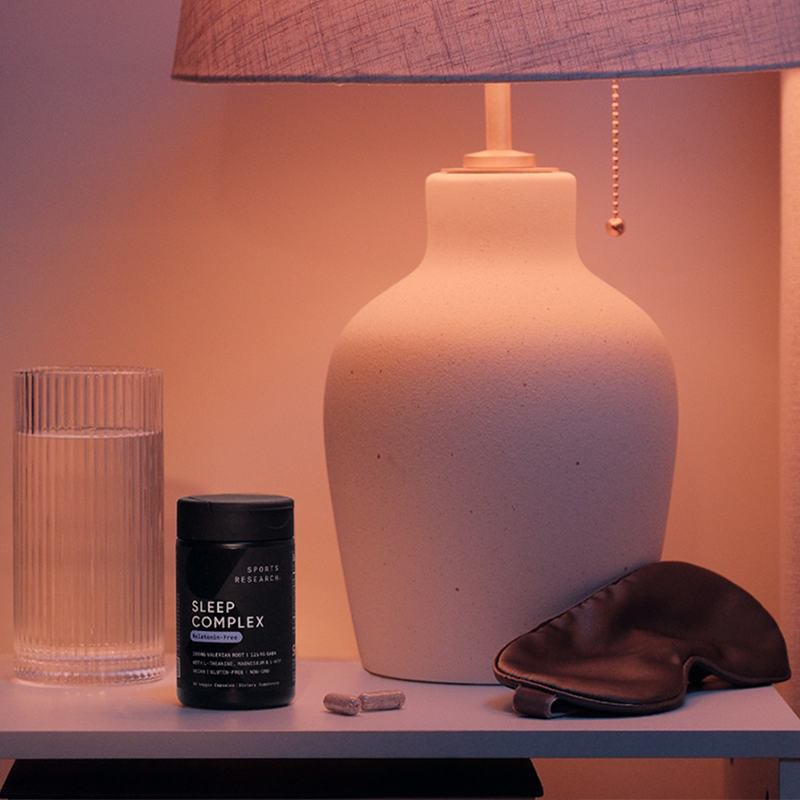
Sleep Complex (Melatonin Free)
This is our go-to bedtime supplement that’s great for people who want sleep support without melatonin.* Sleep Complex combines three types of magnesium with other calming ingredients like Valerian Root, L-Theanine, GABA, and 5-HTP that relax the mind, body, and nervous system.*

Sleep Complex + Melatonin
This product was developed in response to popular demand, as many of our customers were taking a separate Melatonin supplement in addition to our Sleep Complex. With this version, you get the best of both worlds— all the relaxing ingredients of the original formulation with the added benefit of signaling to your body that it's time to sleep.*

Magnesium L-Threonate
This supplement uses Magtein®, a particular type of magnesium that researchers have confirmed crosses the blood-brain barrier.* It means proven effectiveness for sleep, with the added bonus of supporting overall brain health, including memory, focus, and cognition.*

Magnesium Glycinate
Magnesium Glycinate is chelated, which basically means it's easier to absorb and well-tolerated. It’s available in softgels or vegan veggie capsules, and both support heart and bone health, as well as sleep, when you take three servings.*

Lifestyle Tips to Support Better Sleep
Whether you go with melatonin, magnesium or both, here's the reality: supplements alone won’t work if your sleep habits aren’t on point.
Here are a few things you can do to give yourself the best shot at a restful sleep.
Wind down before bed: Do you ever feel more awake after looking at your phone? While we know the doomscroll is tempting, exposure to blue light from electronic devices can actually suppress melatonin production. Try to avoid your phone at least 30 minutes before bedtime to set yourself up for a restful sleep.
Make your room darker: Boost your natural melatonin production by installing blackout curtains or one of those blackout eye masks your friends keep telling you about.
Stick to a bedtime and morning alarm: Same bedtime, same wake-up time. Your body thrives on routine, and this can help regulate your natural sleep cycle.
Cut caffeine and alcohol: Both are stimulants and can disrupt your sleep. Try to avoid drinking coffee after midday if you’re sensitive to it. Matcha or herbal teas are a great alternative. And while alcohol might help you fall asleep easily, it’ll wreak havoc on your sleep quality.
If you've perfected your nighttime routine but are still struggling with sleep, that's when the right supplement can really make a difference.
Get the lifestyle stuff right first, then let the supplements do their thing and help you maximize those precious Z’s.*
Support Your Sleep with Sports Research Magnesium*
At Sports Research, we know that one-size-fits-all doesn't work for sleep. We developed melatonin-free options because we’ve heard stories from our customers of melatonin working temporarily, but then causing issues like grogginess. Our magnesium supplements are designed to give you better sleep without compromising how you feel the next day.*
Our Sleep Complex with Melatonin was created for people who like the effect of Melatonin, especially when combined with Magnesium, Valerian Root, L-Theanine, GABA, and 5-HTP.
Find what works for you, and know that we've got your back with options that are actually built to support real, lasting rest.*
Subscribe & Save
- Save 15% on every order
- Free Shipping
- Choose your delivery schedule
- Modify or cancel your subscription anytime